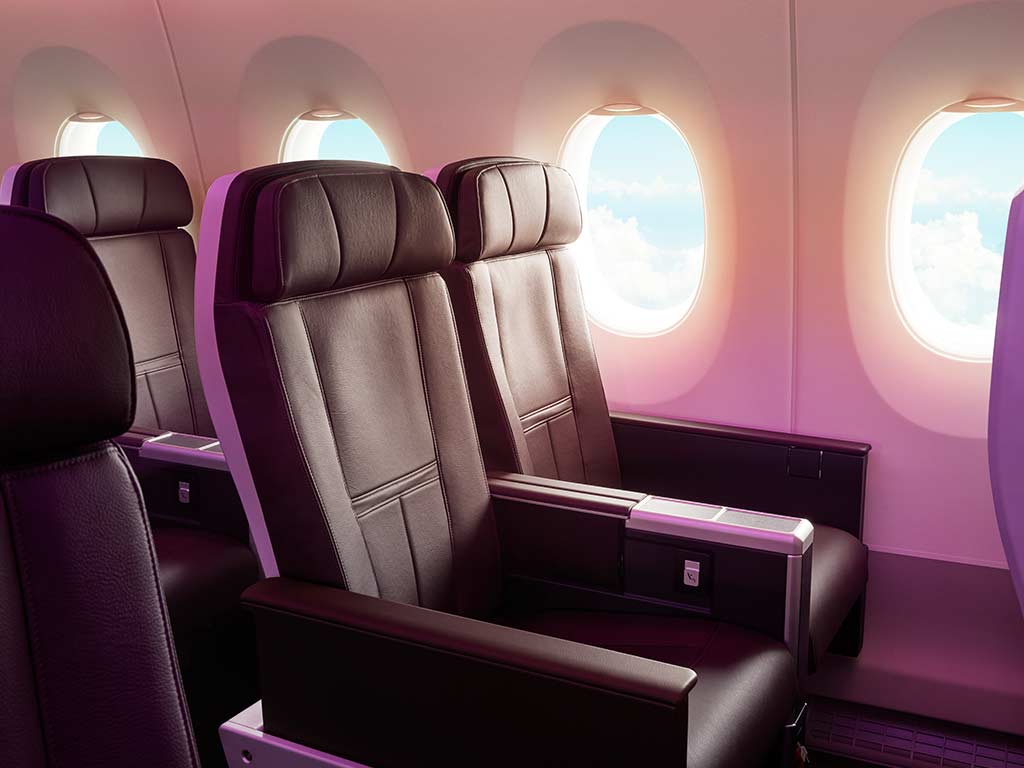
The wonder that is your seat in the sky

By Virgin Atlantic | 20 August 2026 | 7 minute read

It’s your cinema, dining room, reading nook and, with any luck, somewhere to drift off for a few hours. But an aircraft seat is doing something even more important beneath all that comfort: it’s a carefully engineered piece of safety equipment.

From the regulations it has to meet to the detailed LOPA that determines where it sits in the cabin, there’s an extraordinary amount of thinking packed into the place you settle into at the start of a flight.

So, tray table up for a moment. Here’s what really goes into your seat in the sky.

row of three aircraft seats

What regulations do aircraft seats have to meet?

Aircraft seats have to meet strict aviation safety and airworthiness requirements, covering everything from the seat structure and restraint system to the materials used around it.
 

Seats undergo dynamic testing associated with forces of up to 16g, helping engineers understand how they perform under emergency landing conditions. Even details such as seatbelts, tray tables and how the seat is attached to the aircraft can have safety implications.
 

If something isn’t working as it should, approved procedures determine whether the seat can remain in use, needs attention or must be left unoccupied. Safety always gets the final say.

What does LOPA mean on an aircraft?

LOPA stands for Layout of Passenger Accommodation. Put simply, it’s a detailed representation of how the passenger cabin is configured. It shows where seats and key cabin features are positioned, helping define the approved interior layout of an aircraft.

Creating one is rather more complicated than shuffling a few seats around on a plan. The cabin has to work as a complete system. Teams consider how many seats belong in each cabin, where galleys and lavatories sit, the position of doors and emergency equipment, aisle and access requirements, and the other structures that make the interior work.

For our teams, that also means thinking about the experience we want you to have on board. How should the cabin flow? Where does each part of the journey happen? How do we create the right balance of space, comfort and practicality?

The final layout has to bring those ambitions together with the aircraft’s approved design and aviation requirements. Think of the LOPA as the cabin’s incredibly detailed master plan.

Virgin Atlantic Upper Class seat

Choosing a seat is anything but simple

Choosing a chair for the living room can take long enough. Choosing hundreds of seats that will fly around the world for years is another matter entirely.
 

Aircraft interiors are planned long before you first walk through the door. Customer experience, design, commercial and engineering specialists have to take the curved shell of an aircraft and transform it into somewhere thousands of people will eat, sleep, work, watch films, stretch out and get excited about wherever they’re heading next.
 

Safety comes first, of course. Then there’s comfort, especially important when your journey lasts many hours. And finally there’s weight. Every unnecessary kilogram carried through the sky requires energy to move it, so designers are constantly looking for intelligent ways to make seats lighter without compromising the things that matter.

Aircrat seat back tv screen

There’s more inside your aircraft seat than you might think

Look past the fabric and cushions and an Economy seat is a clever piece of engineering, securely attached to tracks in the cabin floor.
 

There’s the tray table, adjustable headrest, seatbelt, safety information and entertainment screen, all packed into a surprisingly small space. Even the cushion, known in the industry as a squab, is designed to balance comfort with the demands of daily use.
 

Every component and material needs to be durable, maintainable and meet aircraft interior requirements.

What maintenance happens to aircraft seats?

Aircraft seats work hard, so regular inspection and maintenance help keep them safe, comfortable and ready to fly. Checks can cover everything from seatbelts and recline mechanisms to tray tables, cushions and inflight entertainment.

Cabin crew report issues they spot, while engineering teams assess and fix faults. Depending on the problem, a component may be repaired or replaced, or the seat left unoccupied until it’s sorted.

What looks like a small detail to a customer can matter rather a lot to an engineer.

Comfort is an engineering challenge too

Of course, nobody settles into their seat thinking about floor tracks and structural loads. You want to get comfortable.

That means seat design is also an exercise in understanding how real people sit, relax, eat, watch a film and try to sleep at 35,000 feet.

Angles, cushioning, support, headrest positions and the relationship between one row and the next all influence how a seat feels. Designers have to think about different body shapes and sizes, different ways of sitting and the fact that what feels right at the beginning of a journey still needs to feel right several hours later.

That balance between engineering and human experience is where the clever stuff happens. A good aircraft seat shouldn’t ask you to admire all the work that went into it.

A black and white image of basic airline seats

From wicker chairs to seats built for the jet age

The earliest days of passenger flying looked remarkably different. Aircraft were often focused on carrying mail, with passengers almost an afterthought. Early travellers could find themselves sitting on wicker chairs in cabins that bore very little resemblance to the aircraft interiors we know today.
 

As commercial aviation grew, so did the sophistication of the cabin. Wicker gave way to metal frames, passenger comfort became increasingly important and aviation safety requirements developed alongside faster, larger and more capable aircraft.
 

Today’s seat is the result of decades of that evolution. It may look elegantly simple once you’re on board, but behind it sits an extraordinary amount of design, testing and engineering.

Why does an aircraft seat need to be lightweight?

Weight matters enormously on an aircraft because everything on board has to be carried through the air for the entire journey.

Making a seat lighter can therefore contribute to reducing the amount of fuel or energy required to operate the aircraft, provided safety, durability and comfort are never compromised.

That creates a fascinating design puzzle. A seat needs to be strong, comfortable and robust enough for intensive use, yet engineers also want every component to earn its place.

Materials, structures, entertainment equipment, cushioning and finishes all become part of that balancing act.

Quite a lot for one seat, isn’t it?

When you fly your aircraft seat has to become almost everything you need.

A place to eat breakfast. A cinema. Somewhere to catch up on work. Somewhere to loose yourself in a movie you’ve managed to miss for the last five years. And, perhaps most importantly, somewhere designed to carry you safely across oceans and continents.

There’s regulation behind it. Engineering beneath it. A LOPA deciding exactly where it belongs. Teams keeping it maintained. And plenty of thought devoted to making sure you can simply sit down, get comfortable and enjoy being looked after.

Not bad for a chair that flies.

Find out about the seat on your next flight